
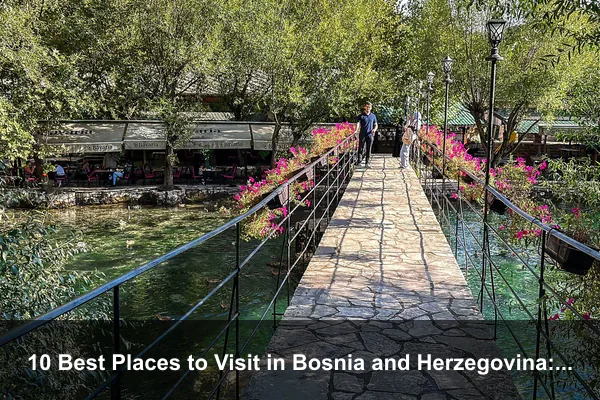
Bosnia and Herzegovina is one of the Balkans’ most rewarding destinations for travelers who want more than checklist sightseeing, with Ottoman bazaars, Austro-Hungarian streetscapes, mountain parks, and river canyons all within a manageable distance.
This article is planned around a practical bridge-and-river route, helping readers connect major cities, heritage towns, and nature stops into a realistic 7 to 10 day itinerary using buses, trains, and short road transfers.
Bascarsija Old Bazaar, Sarajevo
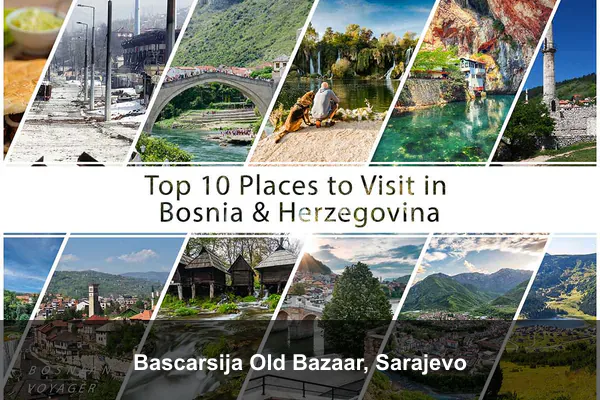
Begin your Bosnia and Herzegovina journey in Bascarsija Old Bazaar, in Stari Grad (Old Town), Sarajevo, where Ottoman lanes, Austro-Hungarian facades, and mosque courtyards reveal the country’s layered history in a single walk. It’s best for street food, crafts, and old-city wandering: sip Bosnian coffee, try cevapi or burek, then browse coppersmith workshops and handmade souvenirs along cobbled alleys. Visit early in the morning for a quieter atmosphere before day-tour groups arrive, especially if you want better photos and unhurried conversations with local artisans. Plan your trip in April to June or September to October for pleasant weather, and reach the area easily by tram or a 20-minute taxi from Sarajevo International Airport.
| Best for | Street food, crafts, and old-city walking |
|---|---|
| Location | Stari Grad (Old Town), Sarajevo |
| Best time | April to June and September to October |
| Access | Tram or 20-minute taxi from Sarajevo International Airport |
Additional Info: Go early in the morning for a quieter bazaar before day-tour groups arrive.
Tunnel of Hope Museum (Tunel Spasa), Sarajevo
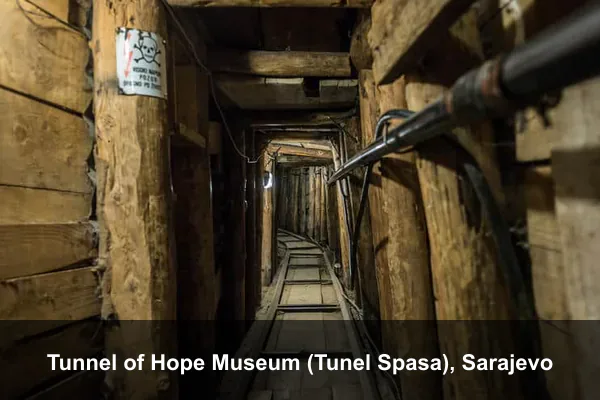
The Tunnel of Hope Museum (Tunel Spasa) in Sarajevo’s Butmir area offers one of Bosnia and Herzegovina’s most powerful insights into the 1990s siege, making it essential for recent history and museum visitors. Start with the short introductory film, then walk through the preserved section of the wartime tunnel to understand how civilians and supplies moved under the airport when the city was cut off. Exhibits of photos, tools, and firsthand accounts add context and emotional weight. It is open year-round, and weekday mornings are usually quieter for a more reflective visit. From Sarajevo’s Old Town, a taxi ride takes about 15 to 20 minutes.
| Best for | Recent history and museum visitors |
|---|---|
| Location | Butmir area, southwest Sarajevo |
| Best time | Year-round, especially weekday mornings |
| Access | Taxi from Old Town in about 15 to 20 minutes |
Additional Info: Watch the short introductory film first so the preserved tunnel section makes more sense.
Stari Most and Kujundziluk, Mostar
Stari Most and the artisan quarter of Kujundziluk in Mostar’s Old Town deliver Bosnia and Herzegovina’s most iconic scene, blending dramatic river views with living Ottoman heritage. Visit for photography and atmosphere: walk the historic bridge, browse copper workshops and handicraft stalls, and pause at a terrace above the Neretva for classic panoramas. For the best light, cross Stari Most at sunrise, then return near sunset to capture both directions in warm tones. The most comfortable seasons are May to June and September to October, when temperatures are milder and crowds are easier to manage. From Sarajevo, Mostar is easy to reach by train or bus in about 2 to 2.5 hours.
| Best for | Iconic views, photography, and Ottoman heritage |
|---|---|
| Location | Old Town, Mostar |
| Best time | May to June and September to October |
| Access | Train or bus from Sarajevo in roughly 2 to 2.5 hours |
Additional Info: Cross the bridge at sunrise, then return near sunset for the best light in both directions.
Blagaj Tekke and Buna Spring
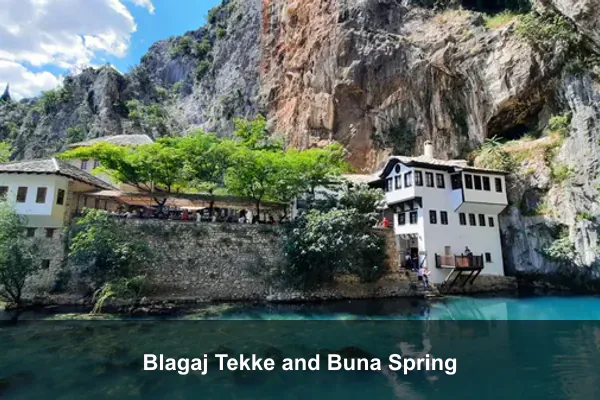
Blagaj Tekke and Buna Spring combine spiritual heritage with striking natural scenery: a 16th-century dervish monastery tucked beneath a towering cliff where the turquoise Buna River surges from a karst cave. It is ideal for scenic lunch stops and cultural visits, with time to tour the tekke interior, walk the riverside path, and photograph the cliff-and-spring panorama. In summer afternoons, choose a riverside table closest to the cliff for cooler shade. Blagaj sits about 12 km from Mostar and is easy to reach by local bus, taxi, or a short drive. For the best mix of mild weather, clear water, and fewer crowds, plan your visit in April to June or September.
| Best for | Scenic lunch stops and cultural visits |
|---|---|
| Location | Blagaj, about 12 km from Mostar |
| Best time | April to June and September |
| Access | Local bus, taxi, or short drive from Mostar |
Additional Info: Sit at a riverside table closest to the cliff for cooler shade during summer afternoons.
Pocitelj Historic Village
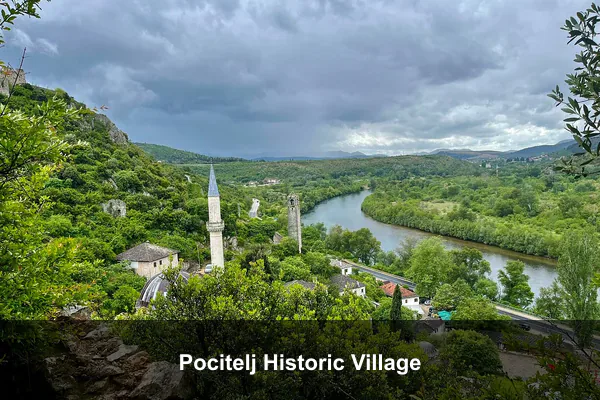
Pocitelj Historic Village, in the Neretva Valley between Mostar and Capljina, is a preserved stone hill town that feels like an open-air architectural museum and one of Herzegovina’s most memorable stops. It is best for fortress views and historic town walks: climb to the hilltop fort for sweeping valley panoramas, then explore Ottoman-era lanes, mosques, and old stone houses cascading down the slope. The best time to visit is April to May and October, when weather is mild for uphill walking and sightseeing. Access is most convenient by car or an organized Herzegovina day tour, especially if you are linking it with Mostar. Wear shoes with good grip, because the polished stone lanes can become slick after rain.
| Best for | Fortress views and historic town walks |
|---|---|
| Location | Neretva Valley, between Mostar and Capljina |
| Best time | April to May and October |
| Access | Most convenient by car or organized Herzegovina day tour |
Additional Info: Wear shoes with good grip because the polished stone lanes can be slick after rain.
Kravica Waterfalls
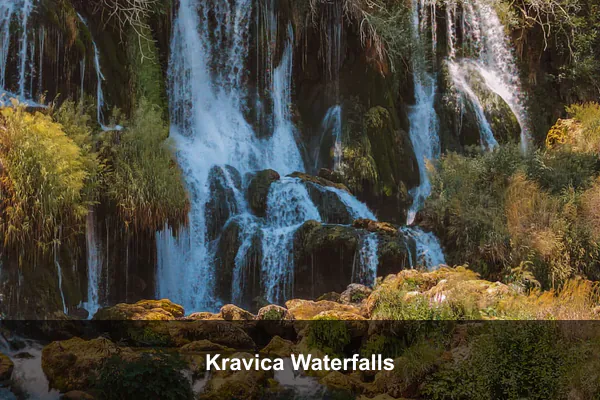
Kravica Waterfalls, near Ljubuski in western Herzegovina, is one of the best nature stops in Bosnia and Herzegovina for waterfall scenery, swimming, and easy summer day trips. About 45 to 60 minutes by road from Mostar, it is most enjoyable from May to September, with the warmest summer months offering the best swimming in its clear pools below the broad cascades. Plan time to walk the viewpoints, take photos of the horseshoe-shaped falls, and cool off in the water. Bring water shoes and a small towel, since the rocks around the pools are uneven and slippery, especially close to the cascade edges.
| Best for | Waterfall scenery, swimming, and summer day trips |
|---|---|
| Location | Near Ljubuski, western Herzegovina |
| Best time | May to September (best swimming in summer) |
| Access | Around 45 to 60 minutes by road from Mostar |
Additional Info: Bring water shoes and a small towel since rocks near the pools are uneven and slippery.
Jajce Old Town and Pliva Waterfall
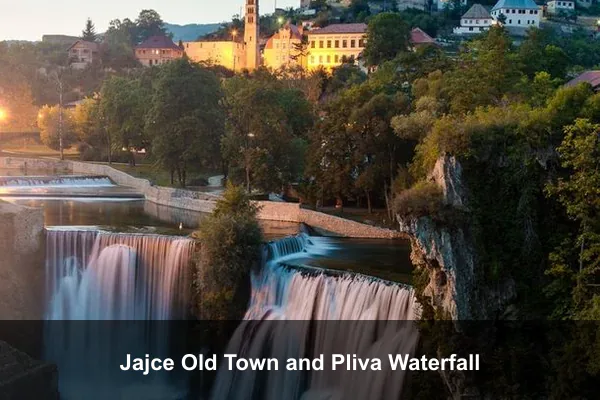
Jajce is one of Europe’s rare towns where a powerful waterfall drops almost directly below a medieval old town, making it perfect for castle viewpoints and compact city exploration. In Jajce, central Bosnia and Herzegovina, you can climb to the fortress for broad valley views, wander the historic core, and then reach Pliva Waterfall on foot. Visit the waterfall early for the best light and fewer people, then head later to the nearby Pliva watermills when the area is quieter. For practical planning, the easiest route is an intercity bus from Sarajevo in about 3 hours, and the best months to visit are May to September.
| Best for | Castle viewpoints and compact city exploration |
|---|---|
| Location | Jajce, central Bosnia and Herzegovina |
| Best time | May to September |
| Access | Intercity bus from Sarajevo in about 3 hours |
Additional Info: Visit the waterfall early, then head to the Pliva watermills later in the day for fewer crowds.
Una National Park and Strbacki Buk
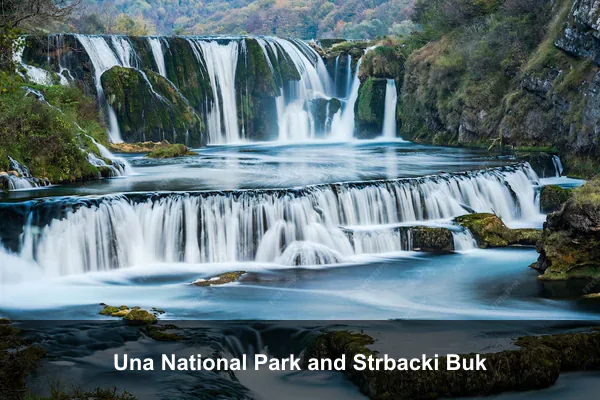
In northwest Bosnia, Una National Park and Strbacki Buk deliver some of the country’s most striking emerald river scenery, with forested canyons, thundering waterfalls, and panoramic viewpoints over the Una. This area is best for rafting, waterfall stops, and short viewpoint hikes, with summer runs offering the most active river experience. Visit from May to September for reliable access and better water conditions, and plan to reach the park by car or by joining a local tour from nearby Bihac in Una-Sana Canton. If you want to raft on summer weekends, reserve in advance, as departure slots often fill quickly.
| Best for | Rafting, waterfalls, and river viewpoints |
|---|---|
| Location | Near Bihac, Una-Sana Canton |
| Best time | May to September |
| Access | Best reached by car or local tour from Bihac |
Additional Info: Reserve rafting in advance on summer weekends because departure slots fill quickly.
Sutjeska National Park and Perucica Viewpoints
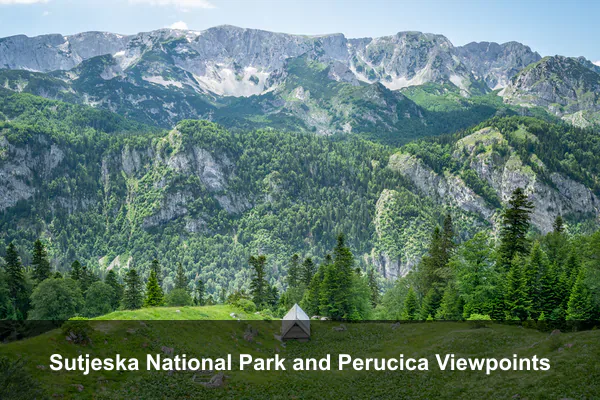
Sutjeska National Park, in the Tjentiste and Foca region of southeast Bosnia, is the country’s top escape for hikers chasing big mountain panoramas and raw wilderness. Base yourself around Tjentiste, then tackle marked trails to sweeping viewpoints over the Perucica rainforest, one of Europe’s last primeval forests, and nearby high ridges for full-day alpine scenery. Visit from June to September for the safest, clearest trail conditions and better weather in the mountains. The easiest way to reach the park is by car from Sarajevo in about three hours, which also gives you flexibility between trailheads. Note that parts of Perucica are strictly protected, so entry on certain routes requires advance arrangement with a registered guide.
| Best for | Hiking, mountain panoramas, and wild nature |
|---|---|
| Location | Tjentiste and Foca region, southeast Bosnia |
| Best time | June to September for trail conditions |
| Access | Most practical by car from Sarajevo (about 3 hours) |
Additional Info: Some Perucica areas are strictly protected and require a registered guide and prior arrangement.
Visegrad and Mehmed Pasa Sokolovic Bridge
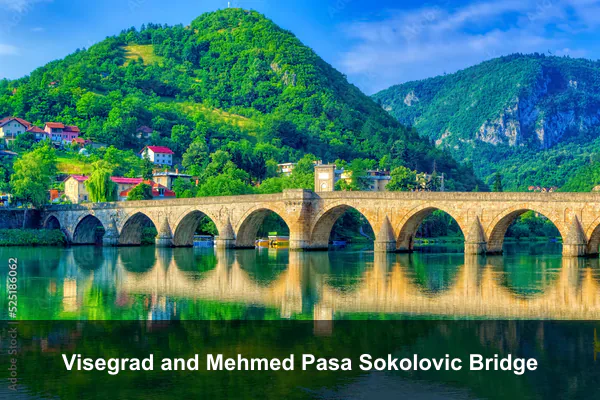
Visegrad, in eastern Bosnia and Herzegovina, is one of the country’s most atmospheric UNESCO stops, where the 16th-century Mehmed Pasa Sokolovic Bridge spans the Drina and tells a layered story of Ottoman engineering, trade routes, and river life. Visit for scenic riverside walks, cross the bridge at different angles for photos, and linger in the old town to see how daily life still orbits the water. For the best conditions, plan April to June or September to October, then stay through blue hour when softer light and calmer water create clearer reflections. Visegrad is easy as a day trip: drive or take an intercity bus from Sarajevo in about 2.5 to 3 hours.
| Best for | UNESCO heritage and scenic river walks |
|---|---|
| Location | Visegrad, eastern Bosnia and Herzegovina |
| Best time | April to June and September to October |
| Access | Drive or intercity bus from Sarajevo in roughly 2.5 to 3 hours |
Additional Info: Stay until blue hour for softer light and clearer reflections on the Drina.
Tips Before You Go
Use Sarajevo or Mostar as your main base, but plan nature days with a rental car or organized tours since many trailheads and park entrances have limited public transport. Keep cash in convertible marks (BAM) for small ticket offices, local cafes, and rural stops where cards are not always accepted.
Late spring and early autumn are the most balanced seasons for this route, with good weather and lighter crowds than midsummer. Dress modestly at religious sites, book rafting or guided mountain routes ahead in peak months, and check road and weather conditions before long transfers.
