
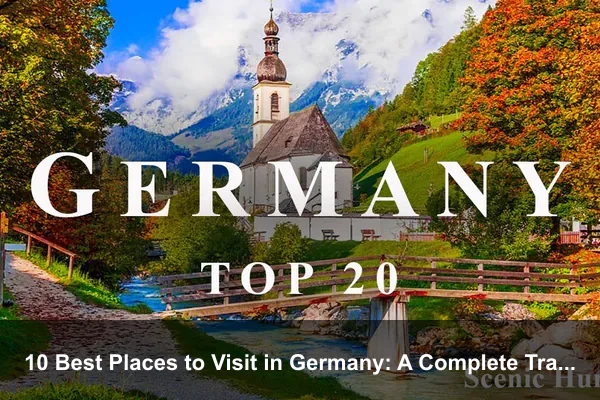
Germany is easiest to love when you travel beyond the obvious city checklist. This guide takes a different route through 10 standout destinations focused on wild coastlines, alpine lakes, industrial heritage, and living old towns, so you can plan a trip with stronger regional character.
Use it as a modular itinerary: combine rail-friendly stops like Luebbenau, Quedlinburg, Leipzig, and Essen, then add targeted nature legs where timing matters, such as Neuwerk mudflats and Koenigssee boats. Each section includes the best season, exact base area, and practical access notes to help you build a realistic route.
Bastei Bridge and Rathen Trails, Saxon Switzerland
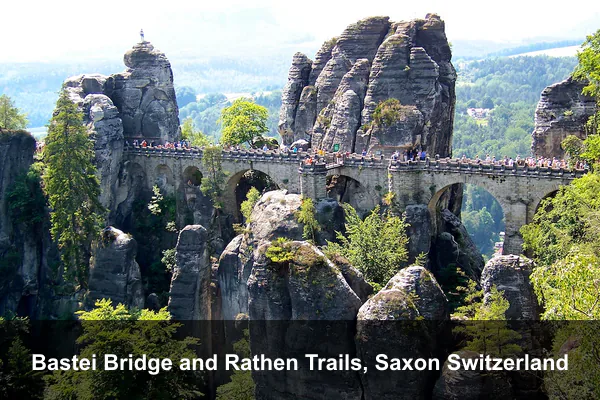
Bastei Bridge and the Rathen trails in Kurort Rathen, Saxony, are one of Germany’s most rewarding day trips for cliff viewpoints, short hikes, and iconic Elbe Sandstone panoramas. From Dresden, take the S-Bahn to Rathen, cross by ferry, then follow the uphill forest path to the bridge and linked lookout routes for dramatic rock formations and river views. May to October offers the clearest, safest trails, but early mornings work well year-round for softer light and quieter paths. Bring small cash for the Rathen ferry and aim to start before 9 a.m. to stay ahead of tour-bus crowds.
| Best for | Cliff viewpoints, short hikes, and iconic panoramas |
|---|---|
| Location | Kurort Rathen, Saxony |
| Best time | May-Oct for clear trails; early mornings year-round |
| Access | S-Bahn from Dresden to Rathen, then ferry and uphill walk |
Additional Info: Carry small cash for the Rathen ferry and start before 9 a.m. to beat tour-bus crowds.
Luebbenau Canals, UNESCO Spreewald Biosphere Reserve
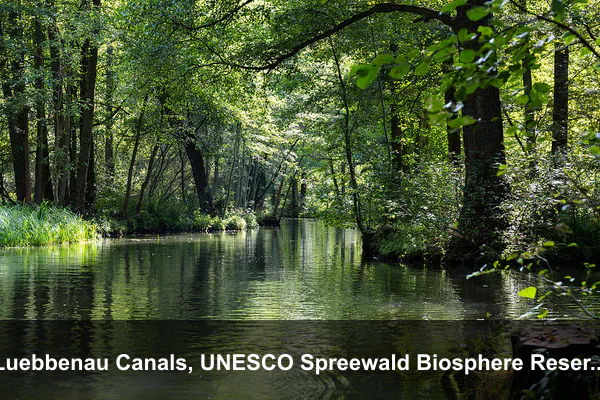
In Luebbenau and nearby Lehde in Brandenburg, the UNESCO Spreewald Biosphere Reserve offers Germany at its slowest: a green labyrinth of canals where Sorbian traditions still shape village life. Come to paddle a canoe, ride a classic punting boat, or cycle easy, flat paths between timber-framed homes, meadows, and waterside inns. The best season is April to October, with late spring especially lush and photogenic. From Berlin, take the RE2 to Luebbenau, then walk a few minutes to the boat docks. For a calmer start, rent from smaller boatyards just outside the main harbor to reach quieter channels in your first hour on the water.
| Best for | Canoeing, punting boats, and flat cycling routes |
|---|---|
| Location | Luebbenau and Lehde, Brandenburg |
| Best time | Apr-Oct, with lush scenery in late spring |
| Access | RE2 from Berlin to Luebbenau, then short walk to boat docks |
Additional Info: Rent from smaller boatyards outside the main harbor for quieter channels in the first hour.
Quedlinburg Old Town and Castle Hill
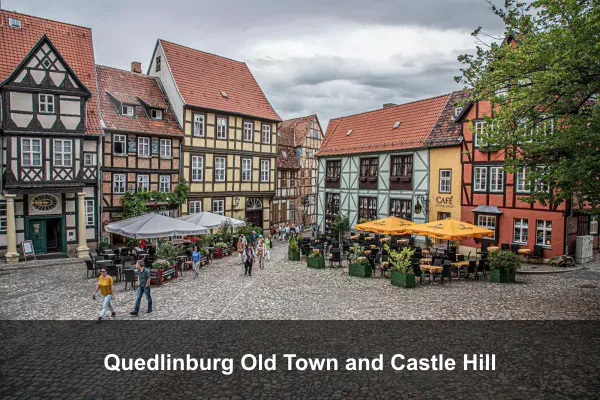
Quedlinburg Old Town and Castle Hill, in the Harz foothills of Saxony-Anhalt, is one of Germany’s most atmospheric medieval escapes, with hundreds of half-timbered houses, winding lanes, and UNESCO-listed architecture that reward slow history walks between museums and storybook squares. Climb to Castle Hill for sweeping views and the collegiate church, then settle into a cozy cafe as the town shifts from spring blossoms (Apr-Jun) to its magical December Advent markets. Practical tip: most streets are cobbled, so grippy walking shoes are much better than smooth soles. Quedlinburg is easy to reach by regional train, usually via Magdeburg or Halberstadt.
| Best for | UNESCO architecture, history walks, and cozy cafes |
|---|---|
| Location | Harz foothills, Saxony-Anhalt |
| Best time | Apr-Jun and Dec for Advent atmosphere |
| Access | Regional trains via Magdeburg or Halberstadt to Quedlinburg |
Additional Info: Most lanes are cobbled, so grippy walking shoes are much better than smooth soles.
Zollverein UNESCO Complex, Essen
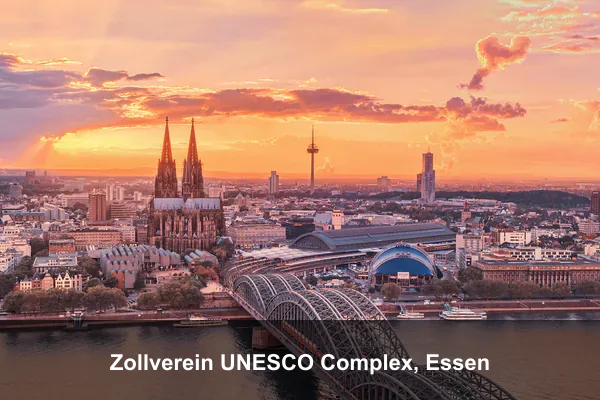
Zollverein UNESCO Complex in Essen turns a former coal and coking megasite into one of Germany’s most distinctive cultural attractions, perfect for industrial heritage, design exhibits, and dramatic architecture photos. Located at Gelsenkirchener Str. 181 in North Rhine-Westphalia, the sprawling site blends preserved industrial structures with museums, contemporary art spaces, and event venues. It is worth visiting year-round, with May to September especially good for open-air programs. From Essen Hbf, reach it easily via Tram 107 or the S2 to Zollverein stops. Since the complex is huge, plan your priority buildings before arrival or use onsite shuttle options to move between key areas efficiently.
| Best for | Industrial heritage, design exhibits, and architecture photos |
|---|---|
| Location | Gelsenkirchener Str. 181, Essen, North Rhine-Westphalia |
| Best time | Year-round; May-Sep for open-air events |
| Access | Tram 107 or S2 to Zollverein stops from Essen Hbf |
Additional Info: The site is huge, so map your priority buildings first or use onsite shuttle options.
Wadden Sea Mudflat Crossing to Neuwerk (from Cuxhaven)
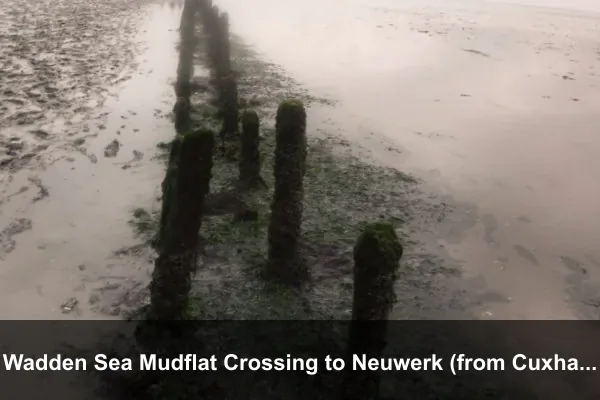
The Wadden Sea Mudflat Crossing to Neuwerk is one of Germany’s most distinctive adventures: a tide-timed walk from Cuxhaven-Duhnen across UNESCO tidal flats in the Lower Saxony/Hamburg Wadden Sea, with huge skies, North Sea views, and rich seabird sightings. It is best for guided mudflat hikes, birdwatching, and raw coastal nature, with local guides explaining tides, wildlife, and the shifting seafloor. Plan your trip from June to September for milder weather and more stable visibility. Travel is straightforward by train to Cuxhaven, then continue via a guided low-tide crossing or a seasonal boat connection. Never attempt the crossing alone, as tidal channels can shift quickly and become dangerous.
| Best for | Guided mudflat hikes, seabirds, and raw coastal nature |
|---|---|
| Location | Cuxhaven-Duhnen to Neuwerk, Lower Saxony/Hamburg Wadden Sea |
| Best time | Jun-Sep with milder weather and stable visibility |
| Access | Train to Cuxhaven, then guided crossing or seasonal boat |
Additional Info: Never attempt this crossing alone because tide channels shift quickly and can become dangerous.
Moselle Valley: Cochem to Bernkastel-Kues
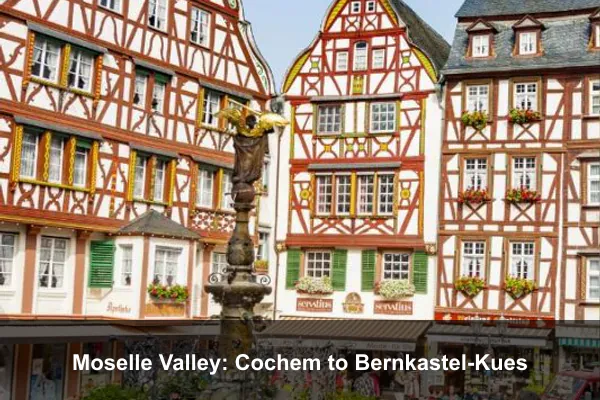
Stretching through Rhineland-Palatinate between Cochem and Bernkastel-Kues, the Moselle Valley is ideal for Riesling tastings, castle views, and relaxed river cruising past steep vineyards and storybook villages. Spend your days wandering half-timbered streets, touring hilltop strongholds like Reichsburg Cochem, and stopping at seasonal family-run Strausswirtschaft taverns for excellent local pours at fair prices. Visit from May to October for the best weather, with September to October especially atmospheric during grape harvest. Getting around is straightforward with regional rail connections and river boats, and Cochem or Trier both make easy, practical bases.
| Best for | Riesling tastings, castle views, and river cruising |
|---|---|
| Location | Rhineland-Palatinate, between Cochem and Bernkastel-Kues |
| Best time | May-Oct; Sept-Oct grape harvest season |
| Access | Regional rail plus river boats; easy bases in Cochem or Trier |
Additional Info: Look for seasonal family-run 'Strausswirtschaft' taverns for excellent local pours at fair prices.
Koenigssee and St. Bartholomae, Berchtesgaden
Koenigssee in Schoenau am Koenigssee, Bavaria, is one of Germany’s most peaceful mountain escapes, best for alpine scenery, quiet air, and a classic electric-boat journey across emerald water to the iconic St. Bartholomae church. Come for the dramatic cliff views, lakeside photos, and easy shoreline hikes that suit most travelers; June to September is ideal for walking, while winter offers striking snowy panoramas. To get there, take bus 839, 841, or 843 from Berchtesgaden to the landing stage, then board early if possible, as the first departures are the best way to reach the St. Bartholomae stop before larger daytime crowds arrive.
| Best for | Alpine scenery, boat trips, and quiet mountain air |
|---|---|
| Location | Schoenau am Koenigssee, Bavaria |
| Best time | Jun-Sep for hiking; winter for snowy panoramas |
| Access | Bus 839/841/843 from Berchtesgaden to the landing stage |
Additional Info: Catch the earliest departures if you want the St. Bartholomae stop before big daytime crowds.
Jasmund Chalk Cliffs and Skywalk Koenigsstuhl, Ruegen
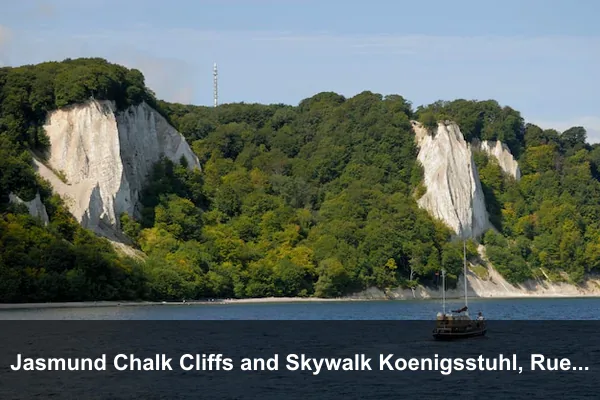
On Ruegen’s northeast coast near Sassnitz in Mecklenburg-Vorpommern, Jasmund’s white chalk cliffs and the Skywalk Koenigsstuhl deliver some of Germany’s most dramatic Baltic panoramas, framed by UNESCO-listed ancient beech forest. Come for cliff-edge walks, sweeping sea views, and shaded beech-forest trails that glow green in May-Sep and turn especially photogenic in October’s golden light. Start by taking the train to Sassnitz or Binz, then continue by shuttle from the Hagen parking area to reach the main viewpoints and trail network. Because direct car access is restricted and popular slots can require timed entry, plan extra buffer time for shuttle transfers and booking windows.
| Best for | Cliff walks, sea views, and beech-forest trails |
|---|---|
| Location | Near Sassnitz, Mecklenburg-Vorpommern |
| Best time | May-Sep; October for colorful forest light |
| Access | Train to Sassnitz/Binz, then shuttle from Hagen parking area |
Additional Info: Direct car access is limited, so add buffer time for shuttles and timed entry.
Leipzig Baumwollspinnerei Art District
Leipzig’s Baumwollspinnerei Art District, at Spinnereistrasse 7 in Leipzig-Lindenau, is a former cotton mill turned creative powerhouse, ideal for travelers interested in contemporary art, studio culture, and neighborhood energy. Wander between major galleries, independent project spaces, and working artist studios to see how Leipzig’s current art scene is evolving in real time. The best moments to visit are the spring and autumn Rundgang weekends, when more studios and exhibitions open to the public and the complex feels especially alive. Reach western Leipzig by tram or S-Bahn, then walk a short distance to the site. Check opening times before you go, since many spaces keep limited weekday hours.
| Best for | Contemporary art, studio culture, and creative neighborhoods |
|---|---|
| Location | Spinnereistrasse 7, Leipzig-Lindenau |
| Best time | Spring and autumn Rundgang weekends |
| Access | Tram or S-Bahn to western Leipzig, then short walk |
Additional Info: Check opening times in advance because many spaces run limited weekday hours.
Voelklingen Ironworks World Heritage Site
Voelklingen Ironworks World Heritage Site in Voelklingen, Saarland, near the French border, is one of Germany’s most compelling UNESCO industrial landmarks, where massive blast furnaces, pipes, and halls are transformed into an immersive heritage and exhibition experience. Visit for the sheer scale and atmosphere: follow elevated walkways through former production areas, then explore large contemporary and history exhibitions that bring the site’s industrial story to life. It is open year-round, but cooler months are best for the long mixed indoor-outdoor route. Access is straightforward by regional train to Voelklingen, followed by a short local transfer or walk. Book an English guided tour early so you can fully understand the blast-furnace process on site.
| Best for | UNESCO industrial history and large-scale exhibitions |
|---|---|
| Location | Voelklingen, Saarland near the French border |
| Best time | Year-round; cooler months for long mixed indoor-outdoor visits |
| Access | Regional train to Voelklingen, then short local transfer or walk |
Additional Info: Book an English guided tour early to fully understand the blast-furnace process onsite.
Tips Before You Go
Reserve transport and stays early for summer weekends, especially around Koenigssee, Ruegen, and popular wine towns on the Moselle. If you plan around festivals or market dates, confirm opening days carefully because many smaller attractions keep reduced weekday schedules.
Before departure, recheck practical updates on DB, Spreewald Service, Saxon Switzerland, Zollverein, and Skywalk Koenigsstuhl; weather, tides, and event schedules can change access quickly.
