
Bhutan rewards travelers who want more than checklist sightseeing. This plan focuses on places where landscape, living spirituality, and local traditions are deeply connected, helping you build an itinerary that balances iconic highlights with quieter valleys and cultural depth.
Rather than repeating a standard city-only route, this guide combines fortress-monasteries, mountain passes, wildlife zones, and village-based experiences across western and central Bhutan. Use it to map a practical trip by season, road access, and activity style before you lock in permits and transport.
Paro Taktsang (Tiger’s Nest Monastery)
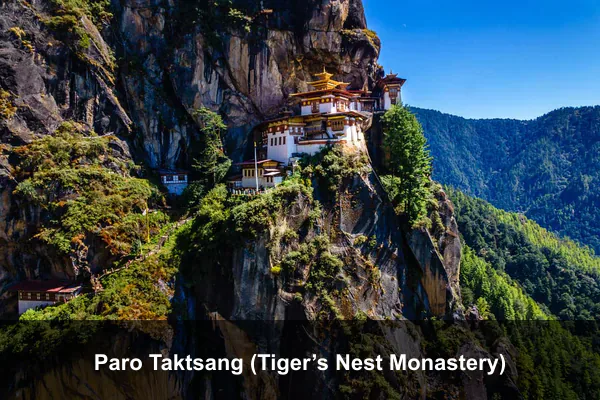
Paro Taktsang, Bhutan’s iconic Tiger’s Nest Monastery, is the must-see spiritual landmark for first-time visitors, perched dramatically on a cliff in the upper Paro Valley above Satsam Chorten. The classic experience is a sunrise-to-lunch trek: begin before 8:00 AM for softer light on the monastery façade and fewer tour-bus crowds, then hike through pine forest to viewpoints and the monastery complex itself. Plan for a 45-minute drive from Paro town, followed by a 2-4 hour uphill walk depending on pace and stops. Visit in March-May or October-November for the clearest mountain views and best panoramic hiking conditions.
| Best for | First-time visitors, spiritual landmarks, panoramic hikes |
|---|---|
| Location | Upper Paro Valley, above Satsam Chorten |
| Best time | March-May and October-November for clear views |
| Access | 45-minute drive from Paro town, then 2-4 hour hike |
Additional Info: Start before 8:00 AM to avoid tour-bus crowds and get better light on the monastery façade.
Punakha Dzong and Mo Chhu-Pho Chhu Riverside
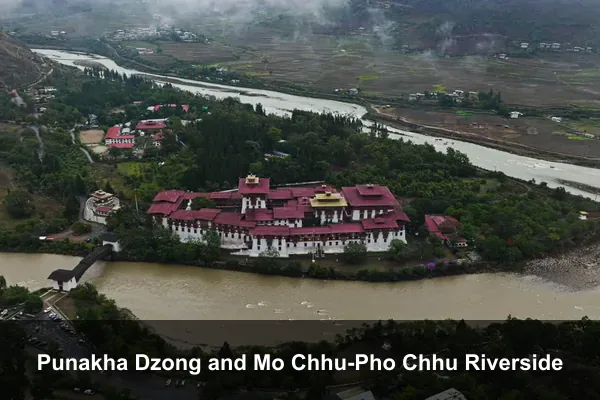
Punakha Dzong and the Mo Chhu-Pho Chhu riverside are among Bhutan’s most photogenic stops, perfect for architecture lovers, photographers, and anyone curious about river-valley culture. Set in Punakha town at the confluence of two rivers, the fortress-temple rises dramatically above the water, especially beautiful in morning light, while a short walk across the nearby suspension bridge adds sweeping valley views and everyday local scenery. Plan your visit in February-April for jacaranda blooms around the dzong, or October-December for clear, dry weather. Most travelers reach Punakha by road from Thimphu via Dochula Pass in about 2.5-3.5 hours; bring socks that are easy to remove, since temple etiquette requires frequent shoe-off entry.
| Best for | Architecture, photography, river valley culture |
|---|---|
| Location | Punakha town at the confluence of two rivers |
| Best time | February-April for jacaranda bloom; October-December for dry weather |
| Access | Road transfer from Thimphu via Dochula Pass (about 2.5-3.5 hours) |
Additional Info: Carry socks you can remove easily, as temple-entry etiquette requires frequent shoe removal.
Thimphu Cultural Core (Buddha Dordenma, Tashichho Dzong, Weekend Market)
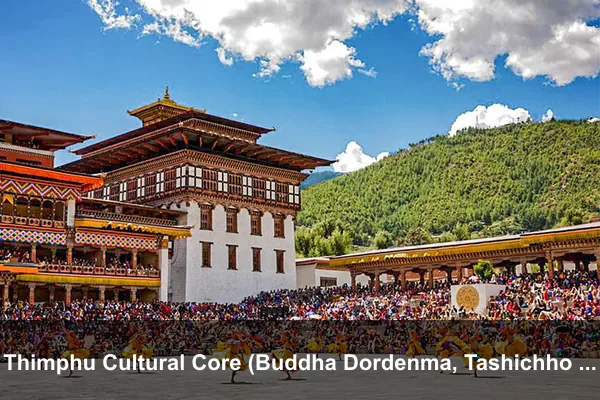
Thimphu’s cultural core is ideal for a compact capital-city day, pairing living urban Bhutan with ceremonial tradition. Start at the Weekend Market for local cheeses, red rice, and craft browsing, and go early to avoid crowds; weekends are the best time for the full farmers’ scene. Continue to Tashichho Dzong to see Bhutan’s administrative and monastic heart, then head up to Kuenselphodrang ridge for the towering Buddha Dordenma and sweeping valley views. Along the way, add museums, street food stops, and artisan shopping to round out the city’s contemporary side. Travel is straightforward year-round, with easy car transfers across central Thimphu and short walking segments at each site.
| Best for | Urban culture, museums, food and craft shopping |
|---|---|
| Location | Central Thimphu and Kuenselphodrang ridge |
| Best time | Year-round; weekends for the farmers’ market |
| Access | Easy by car within city limits; short walking segments |
Additional Info: Visit the weekend market early for local cheeses, red rice, and lower crowd levels.
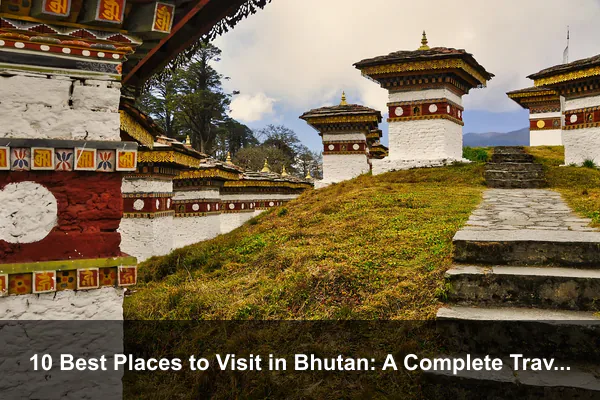
Dochula Pass and 108 Druk Wangyal Chortens
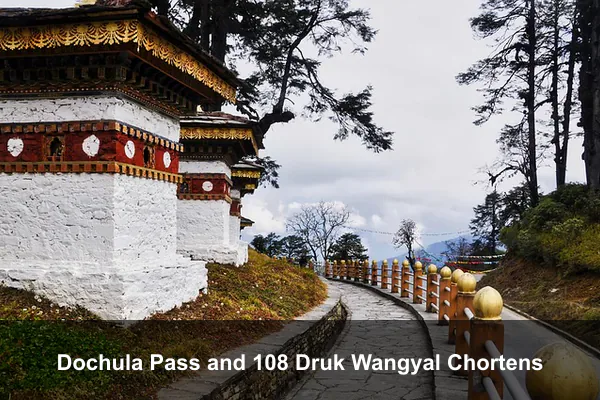
Dochula Pass, between Thimphu and Punakha at about 3,100 m, is one of Bhutan’s best short stopovers for mountain views and scenic drives. The main draw is the 108 Druk Wangyal Chortens, a striking circle of memorial stupas set against sweeping Himalayan panoramas on clear days. Pause here to walk among the chortens, take photos, and enjoy the crisp alpine atmosphere before continuing your journey. Since cloud often builds after noon, plan to arrive in the morning for the best chance of long-range peaks, especially from October to February, when visibility is usually clearest. Access is easy: it is a straightforward roadside stop on the Thimphu-Punakha highway.
| Best for | Mountain views, scenic drives, short stopovers |
|---|---|
| Location | Between Thimphu and Punakha at about 3,100 m |
| Best time | October-February for the clearest long-range mountain visibility |
| Access | Roadside stop on the Thimphu-Punakha highway |
Additional Info: Cloud often builds after noon, so plan this pass in the morning for better peaks.
Phobjikha Valley and Gangtey Monastery
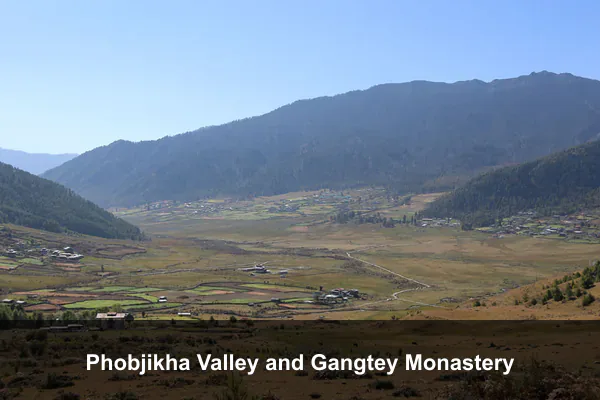
Phobjikha Valley, near Gangtey village in Wangdue Phodrang District, is one of Bhutan’s best places for birdwatching and slow travel, especially when black-necked cranes arrive from late October to February. Visit Gangtey Monastery for sweeping valley views, then follow gentle village trails through open meadows and traditional farmhouses for a quiet look at local life. Farmhouse stays make it easy to settle into the valley’s peaceful rhythm and cool mountain air. Most travelers access the area by road from Punakha or Wangdue, then explore on foot. Bring binoculars, and keep a respectful distance from crane roosting zones, particularly around dusk.
| Best for | Birdwatching, slow travel, farmhouse stays |
|---|---|
| Location | Wangdue Phodrang District, around Gangtey village |
| Best time | Late October-February for crane season |
| Access | Drive from Punakha/Wangdue, then local walks in the valley |
Additional Info: Pack binoculars and keep distance from crane roosting zones, especially at dusk.
Bumthang Valley Temple Trail (Jakar, Kurjey Lhakhang, Jambay Lhakhang)
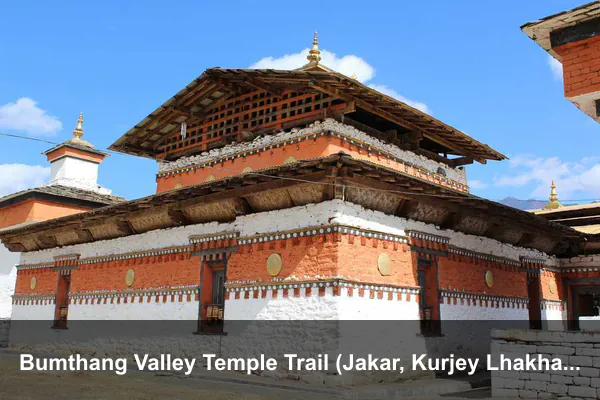
Bumthang Valley is Bhutan’s spiritual heartland, where the temple trail links Jakar’s hilltop dzong with the sacred sites of Kurjey Lhakhang and Jambay Lhakhang across quiet pastoral roads. Visit for pilgrimage heritage, layered history, and a slower countryside rhythm: spend your days walking between monasteries, joining butter-lamp offerings, and pausing in villages to try local buckwheat dishes at family-run eateries. The valley sits in Bumthang District in central Bhutan, with the easiest access by domestic flight to Bathpalathang, though overland travel via Trongsa is scenic and rewarding. Plan your trip in March-May or September-November for clear skies, comfortable temperatures, and the best conditions for temple visits and valley drives.
| Best for | Pilgrimage heritage, layered history, quiet countryside |
|---|---|
| Location | Bumthang District in central Bhutan |
| Best time | March-May and September-November |
| Access | Domestic flight to Bathpalathang or overland via Trongsa |
Additional Info: Try local buckwheat dishes in family-run eateries between temple visits.
Haa Valley Community and Village Homestay Experience
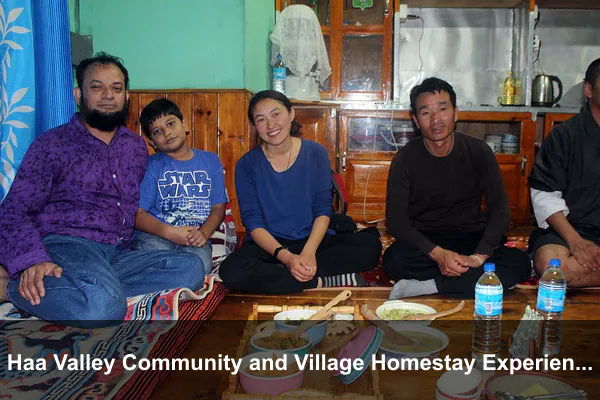
For a quieter side of Bhutan, Haa Valley in Haa District offers deep cultural immersion through village homestays, traditional timber homes, and fresh farm-to-table meals. Reached by a scenic drive from Paro over Chele La Pass, this lower-traffic valley is ideal for travelers seeking offbeat routes and meaningful local contact rather than crowds. Spend your days walking between hamlets, visiting family shrines, learning rural crafts, and joining seasonal farm tasks for a hands-on look at daily life. May to October is generally the best window for village activities and smoother pass conditions. If you want to take part in real farm routines, ask your host in advance about seasonal fieldwork timing so your stay matches planting or harvest days.
| Best for | Cultural immersion, homestays, offbeat routes |
|---|---|
| Location | Haa District, west of Paro over Chele La |
| Best time | May-October for village activities and pass conditions |
| Access | Scenic drive from Paro via Chele La Pass |
Additional Info: Ask your host about seasonal fieldwork timing if you want to join daily farm routines.
Trongsa Dzong and Ta Dzong Museum
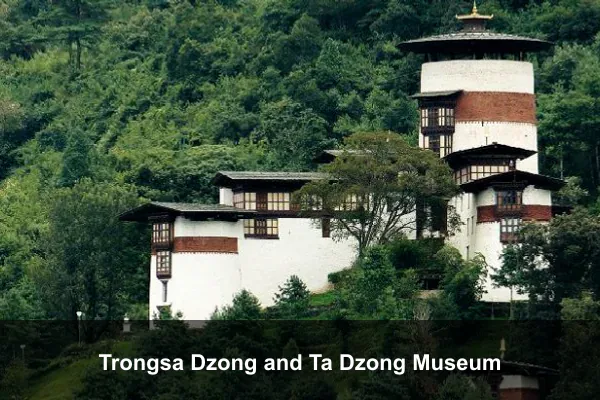
Perched on a dramatic ridge above Trongsa town, Trongsa Dzong and the nearby Ta Dzong Museum are essential for travelers who love history, fortress architecture, and meaningful road-trip stops. Walk the vast dzong courtyards and corridors to see how this strategic stronghold shaped Bhutan’s dynastic and military power, then visit Ta Dzong for exhibits that decode the stories behind royal succession, defense, and regional governance. Located directly on Bhutan’s east-west highway, it is the key overland transit point between western Bhutan and Bumthang. Visit from October to April for drier weather and clearer road travel, and budget extra time here—the museum context makes later dzong visits far more rewarding.
| Best for | History-focused travelers, fortress architecture, road-trip stop |
|---|---|
| Location | Trongsa town on the east-west highway |
| Best time | October-April for drier weather and clearer road travel |
| Access | Overland transit point between western Bhutan and Bumthang |
Additional Info: Budget extra time here; the museum context makes later dzong visits much more meaningful.
Royal Manas National Park Eco-Adventure
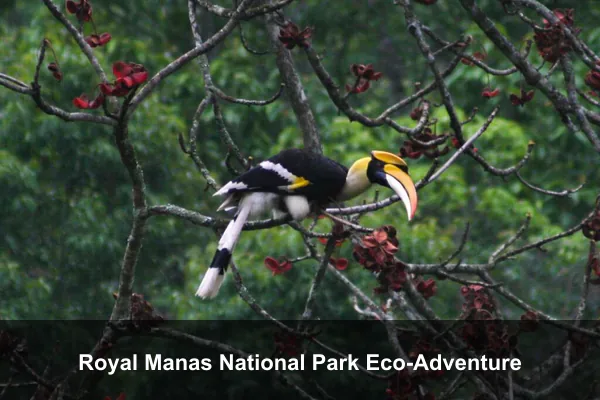
Royal Manas National Park is Bhutan’s premier eco-adventure destination, ideal for wildlife enthusiasts, soft adventure seekers, and conservation-minded travelers looking beyond the highlands. In the subtropical forests of the Sarpang and Zhemgang regions, guided activities include jungle walks, birdwatching, river-based exploration, and tracking for rare species in one of the country’s richest lowland biodiversity zones. The best travel window is November to April, when weather is generally more stable for outdoor plans. Reaching the park requires a long overland transfer, and entry is typically organized through local park-guided logistics, so pre-arranged itineraries are essential. In warmer months, pack leech socks, especially for forest-edge walks.
| Best for | Wildlife enthusiasts, soft adventure, conservation-minded trips |
|---|---|
| Location | Sarpang and Zhemgang regions, southern Bhutan |
| Best time | November-April for more stable weather windows |
| Access | Long overland transfer with local park-guided entry logistics |
Additional Info: Leech socks are useful in warmer months, especially on forest-edge walks.
Laya-Gasa Trek and Highland Culture Route
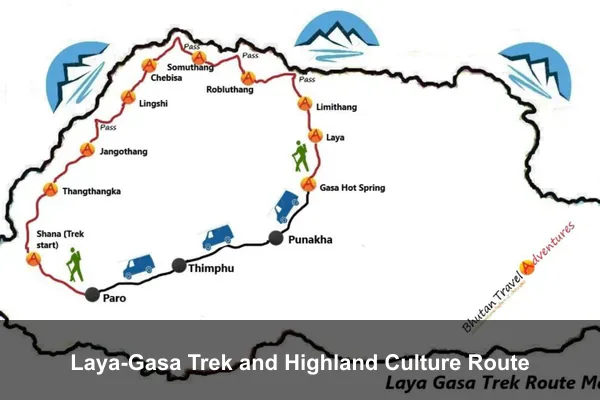
The Laya-Gasa Trek and Highland Culture Route is one of Bhutan’s most rewarding adventures for experienced trekkers, blending dramatic high-altitude scenery with rare cultural immersion in remote yak-herding communities. Usually approached from northwest Bhutan via the Gasa side, this multi-day journey takes you through alpine passes, isolated villages, and traditional highland lifestyles that few travelers see. Along the way, guided camping logistics and permits are essential, so plan through an organized trekking operator with full support. For the best trail conditions and clear mountain views, travel in April-June or September-October. A soak in Gasa’s hot springs is the perfect recovery after long hiking days, and adding an acclimatization buffer day to your itinerary is strongly recommended to reduce altitude-related risk.
| Best for | Experienced trekkers, high-altitude landscapes, cultural trekking |
|---|---|
| Location | Northwest Bhutan, typically linked from Gasa side |
| Best time | April-June and September-October |
| Access | Organized trekking logistics with guide, permits, and camping support |
Additional Info: Build an acclimatization buffer day into your itinerary to reduce altitude-related risk.
Tips Before You Go
Plan Bhutan around route logic, not map distance: mountain roads are scenic but slow, and weather can shift quickly by elevation. Confirm your visa process, Sustainable Development Fee requirements, and internal transport timing before finalizing hotel nights.
Pack layers for variable temperatures, carry cash for smaller towns, and leave room in your schedule for local festivals or monastery events that may affect opening hours. A flexible 7-12 day plan usually gives the best balance of west, central valleys, and one deeper offbeat experience.
